
Reputation management for job seekers
Reputation management for job seekers is mostly free housekeeping done in the right order, plus one thing almost nobody does. The housekeeping is privacy settings, old accounts, your own past posts, and the profile photograph that appears beside your name. The thing nobody does is pulling their own background screening report before applying, while there is still time to dispute an error in it. Between those sits the highest-leverage asset a candidate has: a complete LinkedIn profile, which usually ranks first for a professional name and is the only top result you fully control.
Employer screening: run the search the way a recruiter runs it
Most candidates search their own name while signed in, on a browser that has known them for years, and conclude everything is fine. That result is personalised and it is not what anyone else sees.
- Sign out and use a private window. Better still, use a device that has never been logged into your accounts.
- Search the exact name on the application, in quotation marks, then the name plus your city, then the name plus your current employer or university.
- Open the image tab. It surfaces photographs from events, old profiles, and tagged posts that the main results do not.
- Check page two. Recruiters with a shortlist of four do.
- Search on a phone as well. The mobile result set is arranged differently and often puts social profiles higher.
Write down what appears in the order it appears. That list, not your memory of your internet history, is the thing to work on.
What to clean up, in order
The sequence matters because the items differ enormously in effort and in payoff.
- Privacy settings on active accounts. Free, immediate, and it removes the largest volume of material from view in about twenty minutes.
- Your own old posts. Anything you published and can still delete. Search your own account before deciding it is fine.
- Abandoned accounts under your name. Old forums, a defunct blog, a dating profile, a photo-sharing account from a decade ago. Deleting the account usually removes the page.
- Your profile photograph and headline on anything public. This is the single most-viewed item in the whole set.
- Tagged photographs and mentions by other people. Ask first; report only if it breaks the platform's rules.
- People-search listings. Slower, tedious, and worth doing because they carry an address history.
- Everything else. Articles, records, and other people's posts. These are the hard category and they need a different page.
Steps one to four are the ones that change the search result and they cost nothing. Most candidates who do them find the problem was mostly solved by an afternoon of housekeeping. The page on how to reduce your digital footprint goes further into the mechanics.
LinkedIn is the highest-leverage single asset
For most professional names, the LinkedIn profile ranks first or close to it. That makes it the one first-page result a candidate fully controls, and treating it as a formality wastes the advantage.
A complete profile with a current headline, a real summary, and consistent dates does three things at once. It occupies the top result, so what a recruiter reads first is what you wrote. It resolves the identity question, so a person with your name elsewhere is easier to distinguish. And it corroborates the application, since a recruiter comparing a CV against a profile is checking for contradictions rather than reading for pleasure. Dates that disagree are noticed more often than gaps are.
Building one or two more owned results is the natural extension: a personal site with your name in the domain, a public portfolio, a conference or publication listing. These take weeks to rank, which is why this work belongs before the job search rather than during it.
The background check is a separate thing
The search is informal. The background check is a consumer report, and it comes with rights that most candidates never use.
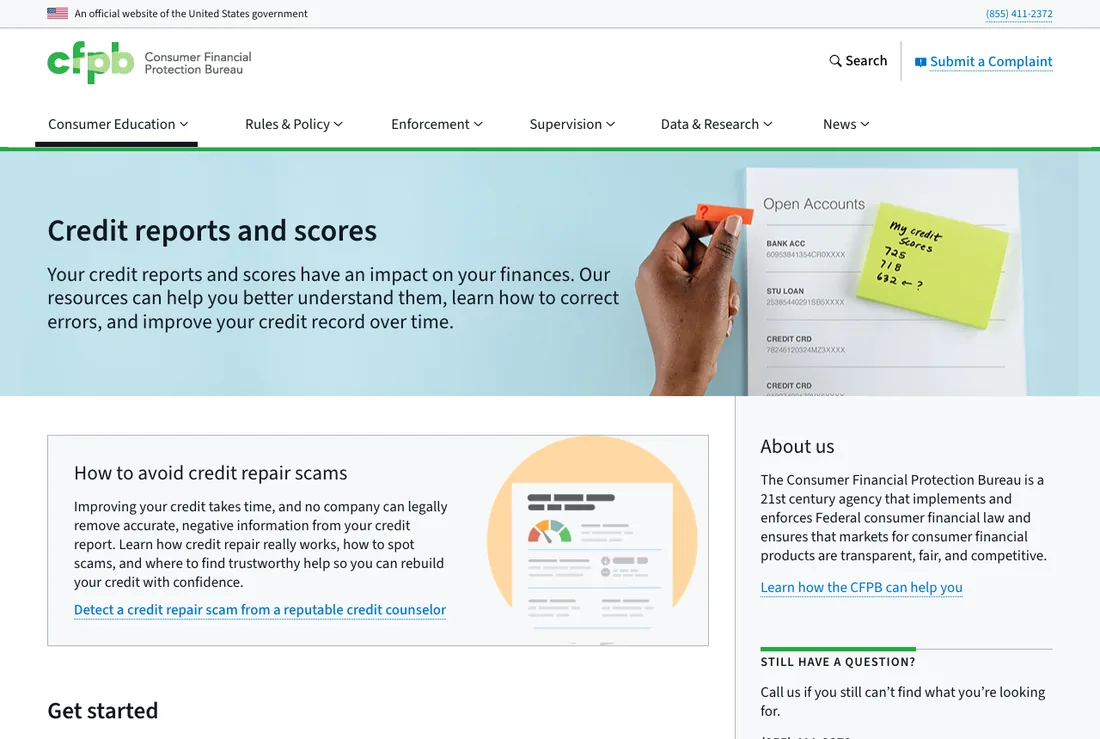
The federal consumer agency's explanation of what background screening reports contain and how to dispute an error in one. The dispute process runs against the reporting agency and the original source, and it takes weeks rather than days. Screenshot taken 19 August 2026.
You can obtain your own file before anyone else does. The CFPB on credit reports and background screening explains what these reports contain, how to request yours, and how disputes work. Errors are ordinary: a record belonging to someone with a similar name, a charge shown without its dismissal, employment dates off by a year, a debt already settled.
The reason to do this before applying is timing. Disputes take weeks. Hiring decisions take days. A candidate who discovers the error during the process has almost no room to fix it, and the page on do employers google you covers what the employer must tell you when a report is going to cost you the offer.
The opt-outs worth the tedium
People-search sites publish an address history, relatives, and previous employers, and they rank easily on an uncommon name. Working through their opt-out forms is dull and it is effective. Some states now require these companies to register publicly, and California's data broker registry is a usable index of who they are even if you do not live there, because the companies operate nationally.
Two realistic expectations. Listings reappear after a data refresh, so this is a repeated task rather than a one-off. And paid removal services are largely performing the same manual submissions you can perform yourself, which is fine if you value the time and worth knowing before you subscribe.
Alongside the opt-outs, Google's Results About You tool monitors for search results containing your home address, phone number or email address and lets you request their removal. It is free and it covers contact details rather than unflattering content, which is a narrower category than most people assume before they try it.
What you cannot clean up
Some things stay, and planning for the conversation is more useful than planning a removal that will not happen.
A public court record remains public unless it is sealed or expunged, and an expungement does not reach a news article that reported the case. A former employer's statement of fact is theirs. A published article is the publication's. Someone else's post about you comes down only if it breaks the platform's rules.
Where an item is going to be found, the workable approach is a short, factual account you are prepared to give, offered at the point in the process where it belongs rather than volunteered on the application. Never misstate it on a form: an inaccurate answer to a direct question is a separate and more serious problem than the underlying record. If you are unsure whether an item is fixable or permanent, that classification is the first thing a reputation audit establishes.
Questions about reputation management for job seekers
Do employers google you?
Most look at some point, and many also order a formal background report from a screening company. Assume both, and check what each would return before you apply rather than after.
What do employers look for online?
Mainly confirmation. Does the profile match the CV, is the person professional in public, and is there anything that would embarrass the organisation. Contradictions between a profile and an application are noticed more often than gaps.
How long before applying should I clean up my search results?
Several weeks. Deleted pages keep appearing until search engines recrawl, data broker opt-outs take time to process, and a new owned page takes weeks to rank. Housekeeping the night before an interview will not have taken effect.
Should I delete my social media accounts before a job search?
Usually not. Setting them private achieves most of the same effect, and an absent professional presence can itself invite questions. Deleting is worth it for abandoned accounts you no longer use.