What is AI reputation management?
AI reputation management is the work of finding out what AI assistants say about a person or a business, tracing where those statements come from, and correcting the sources they draw on. It matters because an AI answer is a summary with no visible chain of custody: the reader gets a confident paragraph rather than a list of results to weigh up. This section explains how those answers are assembled from training data and live retrieval, why a wrong one can persist long after the page behind it has been fixed, and which levers actually reach the output.
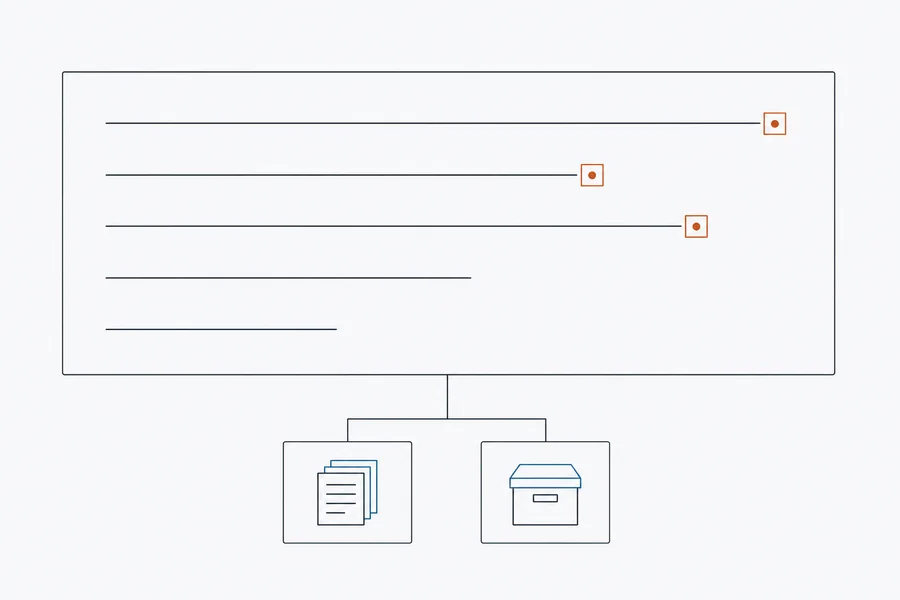
There are two distinct mechanisms behind an AI answer, and they behave differently. The first is training: the model absorbed text at some point in the past and carries a compressed version of it. You cannot edit that. The second is retrieval, where the system searches the live web while answering and summarises what it finds. That half is reachable, because it is reading pages that exist right now. Most consumer assistants use both, which is why the same question can produce a current answer one day and a stale one the next.
The practical consequence is that correcting an AI answer is indirect work. You do not file a request with the model. You fix, remove, or outweigh the sources it is reading, and then you wait for the retrieval layer to notice. Where a page has been corrected at the source, the answer usually follows. Where the claim came from training rather than retrieval, it can persist for a long time, and no honest description of this work pretends otherwise.
The second consequence is that visibility and accuracy are different problems that tend to get sold together. Being named in an answer about your category is a marketing question, and the vocabulary around it is still unsettled: generative engine optimisation, LLM visibility, AI search optimisation, all describing roughly the same activity. Being described correctly when someone asks about you specifically is a reputation question. A business can be highly visible in AI answers and consistently described wrong, and the fixes for those two things are not the same.
What can be done here is narrower than the field's marketing suggests, and it is worth stating plainly. There is no removal request for a model's belief about you. There is no way to verify that a correction has propagated everywhere, because each assistant answers differently and answers vary between sessions. What is real is this: find out what is being said, identify the sources it traces back to, correct or remove what is wrong at those sources, publish accurate material where the retrieval layer will find it, and check again later. Establishing what the assistants currently say about you is the measurable part, and it is one of the things an audit records.
Reputation in ai search, page by page
What Is Generative Engine Optimization (GEO)?
The practice of being cited in AI answers, what it borrows from SEO, and what is different.
LLM Visibility: Being Found in AI Answers
Being named when someone asks an assistant about your category, and how that gets tracked.
What Does ChatGPT Say About Your Business?
How to check what assistants report about you, and how to read answers that vary between sessions.
How to Fix Wrong Information in AI Answers
Correcting the sources rather than the model, and the realistic limits of that approach.
How AI Answers Are Built
Training data and live retrieval, how they combine, and why that decides what can change.
AI and the Permanence Problem
Why an answer can outlive the page behind it, and what that means for old content.
Questions about reputation in ai search
What is AI reputation management?
Finding out what AI assistants say about you, tracing those statements back to the sources they are drawn from, and correcting or outweighing those sources so the answers change.
What does ChatGPT say about my business?
The only way to know is to ask, several times, in fresh sessions, with the questions a customer would use. Answers vary between sessions, so a single response is a sample rather than a verdict.
How do I fix wrong information in AI answers?
Correct it where it lives. Fix or remove the source pages, publish accurate material the retrieval layer can find, and recheck over time. There is no request form that edits a model directly.
Can I make an AI stop saying something about me?
Not on demand. Where the claim comes from live retrieval, fixing the sources usually changes the answer. Where it came from training data, it can persist, and no provider can promise otherwise.